Biodefense Shelters
Notes from SHELTER Weekend, published years later.

Back in 2022, pandemics were on the mind and the FTX Future Fund had a lot of money it wanted to spend. So in August, a group of people met in Wytham Abbey to investigate the prospect of reducing the damage done by even worse pandemics, and in particular, ensuring that they couldn’t be existential risks (capable of killing all humans). Shortly thereafter, Janne Korhonen wrote up a detailed report (direct link, EA Forum discussion), and I didn’t get around to writing up my thoughts until now. In my mind, this weekend stood out as a ‘successful failure’; we investigated an option, discovered that it was low value, and mostly stopped spending more resources on it.
The Threat Model
Some of the worst pandemics have killed a significant fraction of all humans exposed to them. Maybe worse pandemics will appear, and end all of the civilization that they touch. But diseases require physical proximity to be transmitted. As anyone who has played Plague Inc knows, if Madagascar closes its ports before the disease arrives, humanity survives.
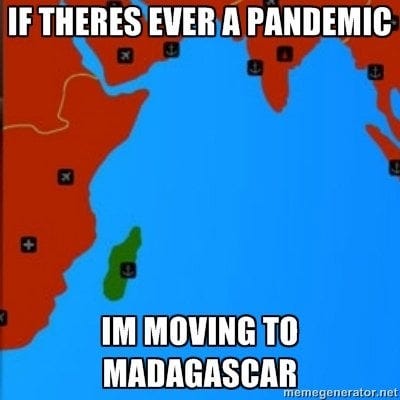
So unlike other x-risks where the adversary is thinking against you (like AGI) or cosmic risks which might be hard to manage (like meteors or gamma ray bursts), biodefense is relatively easy to manage. You just need some people who never get exposed to the disease, and walls and distance are enough to manage that.
This can be challenging—some diseases have an extremely long time between when a person gets infected and develops symptoms. One reason why COVID went so poorly for humanity was because oftentimes, people would becomes infectious to others before they themselves had symptoms and knew they were sick. We considered how these and other factors would affect shelter design.
So—why not build Madagascar in real life?
Zero to One
Well, first, there already is a Madagascar, and many other island nations. Many of them already had a success story in their early COVID response. A disease that was invisible for longer might have managed to spread, but even as you increase the quarantine level, there are already existence proofs.
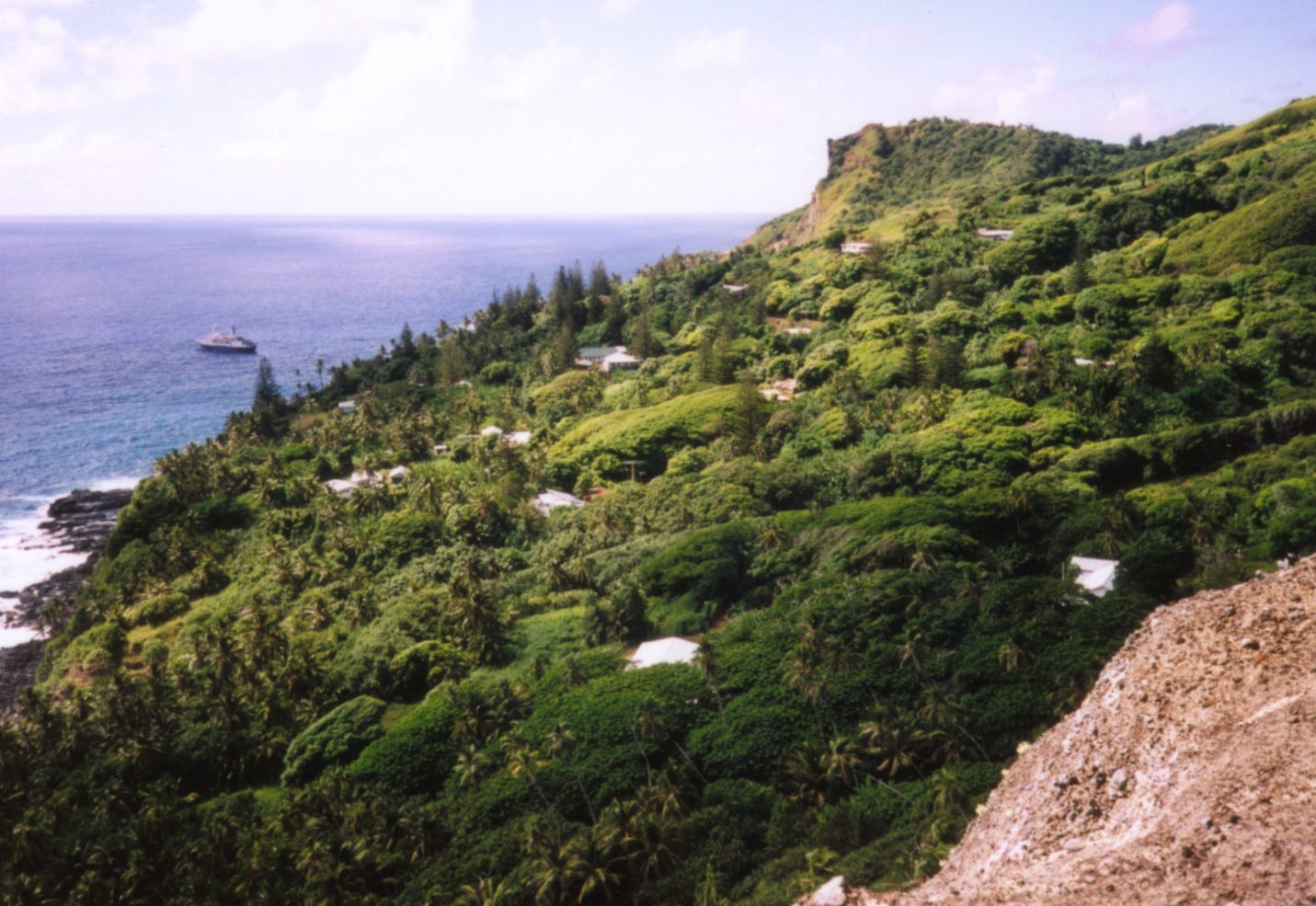

The Pitcairn Islands are habitable, support agriculture, and have already been inhabited without contact from the rest of civilization. (There was 18 years between the founding by HMS Bounty mutineers and actual contact between the islanders and the rest of civilization.) Ships currently arrive ~annually, meaning that even if it takes six months for a hyper-pandemic to be noticed, they have about a half chance of knowing not to let anyone onshore.
North Sentinel Island is an exclusion zone where somewhere between 50 and 400 people live, out of contact with the rest of the world (and already violently protecting that lack of contact). No disease will naturally spread there.
So we could build a Vault, but the point wouldn’t be going from 0 to 1; it’d be going from some to some+1. Most of the value for projects like this—if you’re interested in x-risk instead of catastrophic risk or simple humanism—comes from gains from having the first option.1
Separation is Costly
One phrase that got repeated a bunch over the weekend was “the ship is the best lifeboat.” Efforts to preserve civilization need to preserve significant numbers of people and machines if they want to preserve anything like our current economy or understanding of nature. Relatively few people already live in the isolated vaults because isolation is painful and expensive. Amazon doesn’t deliver to the Pitcairn islands, and fuel is only delivered once a year, since they can’t refine it locally.
Near the beginning of the weekend, I asked the group (of ~25 people professionally interested in shelters, or at least thinking about them) to raise their hands if they would personally live in a shelter or move their family into one. No one raised their hands.
Lack of Warning
In the cases you most want the shelters, a disease has already been spreading. In order for the population in the shelter to be fine, they need to have already been secluded away. For example, a friend’s plan had been to go to New Zealand if any major crises happened; by the time he looked into booking flights there because of COVID, the government had already shut down all incoming flights. Oops.
As well, disaster construction projects have a long history of not being well-tested or well-made. People who live in houses every day notice problems; shelters that normally stand vacant might have serious problems that go unnoticed until too late. The typical mitigation for this is to create dual-use shelters (a nuclear blast shelter that normally is an underground swimming pool, for example) or have them continuously operated. (We know the North Sentinel Island society works for centuries because—it already has!)
So there might be a possibility of a time-sharing arrangement. Maybe everyone spends a month a year in the Strategic EA Reserve, which ends up being net worth it for them because they can still work remotely and they get to network with everyone else who’s in the Reserve that month. Unfortunately, any sort of reasonable quarantine2 means the amount of time spent actually interacting instead of isolating alone is miniscule.
The Value Proposition
Nevertheless, let’s imagine that we want to build a shelter anyway. What’s the altruistic benefit, from an x-risk perspective?
Well, so long as humanity is a single-planet species, we face some amount of natural x-risk,3 and so every century shaved off the amount of time it takes to become spacefaring is a reduction in overall risk. You could measure this in the QALYs earned along the way, or in galaxies that are reachable by spacefaring probes, currently slipping out of reach because of expansion. So how would shelters impact that?
First, assume that on the baseline path all humans integrated with civilization die and those isolated from civilization survive, but the disease fades without any human hosts, and so it’s safe to repopulate the Earth. If only strongly isolationist societies like the Sentinelese survive, then it might be a long time until they decide to start the repopulation process.4 Conditionally isolationist societies, which know how to check whether it’s safe to spread or not, might shave thousands of years or centuries off of the timeframe.
Second, they might have a much easier time repopulating the Earth if their archeologists already understand our artifacts, either because they have durable copies of Wikipedia, or they speak the same languages that our records are written in, or they had a continuous tradition of preserving our hard-won knowledge. Even if we just sent textbooks back in time to the Romans, they probably could have industrialized 1500 years earlier.
Third, they might have an easier time facing manmade x-risks than we do. They might know to avoid certain kinds of biological research, or have orders of monks attempting to make progress on math relevant to solving the alignment problem, making use of the centuries before they can restart the semiconductor manufacturing process. The inheritance of contemporary knowledge of communication technology and political philosophy, combined with a shared origin, might impact how their society develops for the better.
Some Bad Ideas, and One Good One
We looked into submarines (dependent on supply chains that will fail). We looked into cruise ships and aircraft carriers (if you convert the top deck to agriculture, this is an island that you can move—which is probably worse than a stationary island). We looked into moving pacifist separatist groups (like the Amish) to islands (they don’t have an attitude to disease compatible with hyper-quarantine). We looked at investing in biological response systems / public health investments (hard to get over the costly separation).
We did come up with one idea that I liked. A handful of countries have universal conscription (i.e. both men and women must serve), and conscientious objector programs (you don’t have to serve out your tour in the military). You could find an island capable of agriculture and set up an organic, sustainable, self-sufficient farm on it, operated by the young adults doing their national service, which also follows strict quarantine procedures (which are amortized across the 19-month tour).
This has many of the beneficial properties of the timeshare system (you spend a month a year across a 20-year career there, it’s just all at the front) while not getting all of them (everyone in the shelter is at the beginning of their careers, instead of having significant knowledge and expertise), and avoiding some of the drawbacks (no one has the chronic problems of age yet, the lowest fraction of their time is spent in quarantine for any level of quarantine you pick). There’s also no independent shelter identity (someone in the shelter fully expects to reintegrate into society afterwards) and the costs of separation are lowest.
The core challenge, in my view, was getting someone to run the project who believed the quarantine procedures were important enough to implement correctly. It’d be too easy for this to devolve into just another organic farm rather than a real shelter.
I emailed a lobbyist; I think this got put on a list, and probably forgotten in the wake of FTX’s collapse shortly thereafter (they had been the main large buyer interested in projects in this space). I nevertheless think the ‘backup’ sustainable farm worked by people in national service is both cheap and worthwhile on its own merits, without billionaire backing. I think its value is probably measured in nanowins or picowins instead of microwins, however.
One COVID vaccine does you a lot of good; four different varieties of vaccine is not four times as good.
literally “40 days”, longer than a month!
See Toby Ord’s The Precipice for a detailed discussion of this.
The “Long Pause”, when Polynesian seafarers stopped expanding further for over a thousand years, might have been downstream of ocean currents and technological factors, but it also might have been cultural, where people decided not to do it for some reason and it took a long time to break out of that cultural equilibrium. How long will it take a single tribe of hunter-gatherers on their own island, knowing that there is a strange and presumed hostile world out there, to jump to a second island?